
INSIGHTS
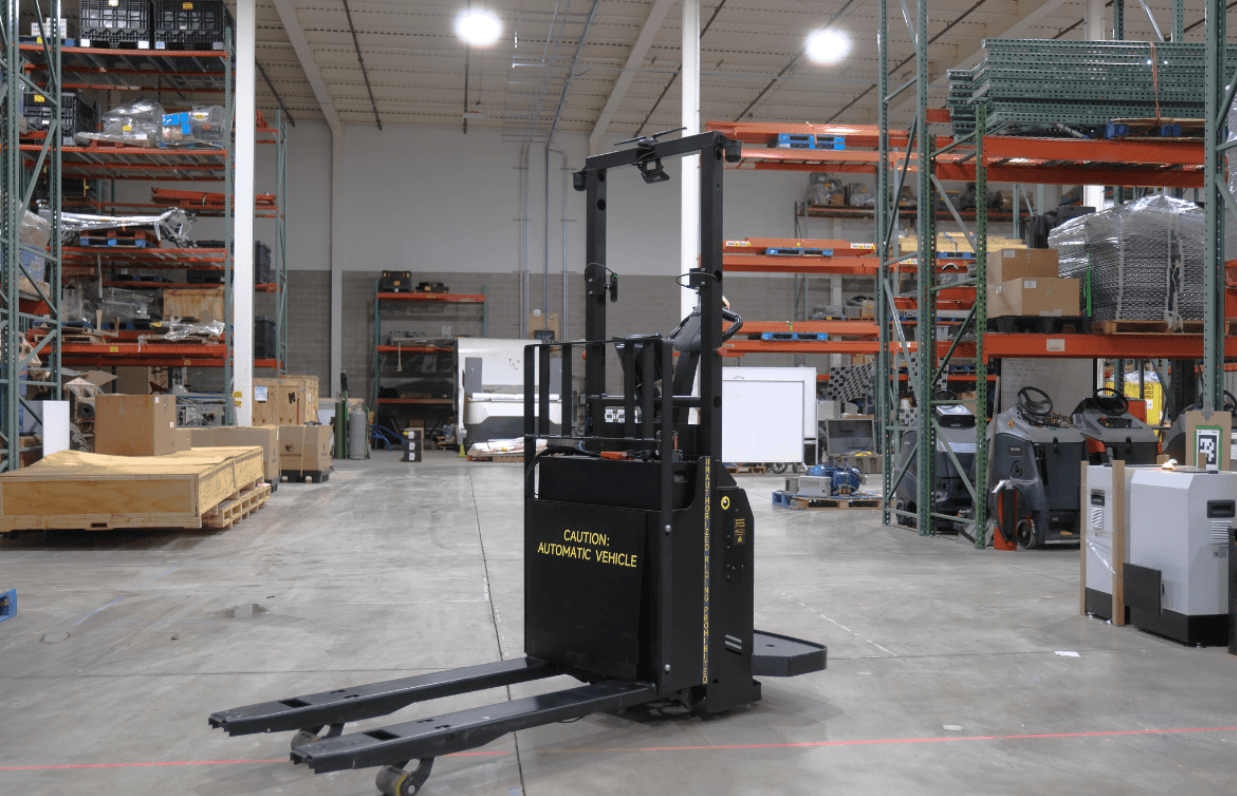

When we designed CoreFlex, our modular autonomy architecture we had a deliberate architectural decision that sensor selection isn't just a hardware decision. It's a platform decision. We didn't want to be optimizing just one machine. Get it right and every machine you ever build on that foundation inherits the benefit.
That's the lens through which we approach every component that goes into CoreFlex. And it's why our decision to partner with Hesai, and build our LiDAR perception layer on their JT128
Why the JT128
We evaluated several LiDAR options before committing to the JT128. The deciding factors weren't spec sheet claims, they were specific properties that matter when you're deploying the same sensor architecture across a pallet jack, a scrubber robot, or any platform.
Form factor. The JT128 has a 30mm window height — roughly 70% smaller volume than comparable 360° LiDARs. That sounds abstract until you're trying to integrate a sensor into three different machine types using a shared mounting architecture. The JT128 fits cleanly across the range of platforms we work with, without forcing mechanical redesigns for each one.
Vertical field of view. The JT128 covers 360°×187°, a hyper-hemispherical field of view that sees meaningfully above and below the robot, not just around it. For autonomous pallet handling, this is critical: detecting entry geometry below the forks, aligning with rack beams at varying heights, maintaining spatial awareness of the load throughout a pickup and transport cycle. A sensor that only scans horizontally creates blindspots in exactly the places where pallet operations demand precision
What this means for our OEM partners
Sensor validation is one of the largest hidden costs in autonomous product development. When you build from scratch, you don't just pick a sensor, you qualify it against your algorithms, your operating conditions, your safety requirements. For each new machine type, that process starts over.
With CoreFlex, it's done once and shared. The JT128 is now validated against our autonomy stack, our AI perception models, and our safety-rated stop functions across multiple robot types. When an OEM comes to us with a new platform, the sensor integration is solved infrastructure.
Four new CoreFlex-powered platforms are already in development using this stack. Each one benefits from the qualification work done for all the others. That compounding effect is exactly what the architecture is designed to produce.
On choosing partners, not just components
Beyond the specs, Hesai's working style was part of the decision. Building production autonomous systems requires hardware partners who operate on software timelines. Fast iteration, direct engineering engagement, rapid response when edge cases surface in the field. Hesai's team engaged directly with our engineers, turned around firmware fixes on cycles that matched our development pace, and treated our integration challenges as their problem to solve.
That responsiveness matters as much as the JT128's technical specifications. The sensor at the center of our platform needs a partner behind it who takes production reliability as seriously as we do.
The JT128 partnership announced at MODEX 2026 is one piece of a broader component strategy. A deliberate approach to building a sensor stack that performs consistently across every form factor CoreFlex supports. More on that soon.
Read Hesai's perspective on the partnership at hesaitech.com. If you're an OEM evaluating CoreFlex, connect with our team.

